
Reviews
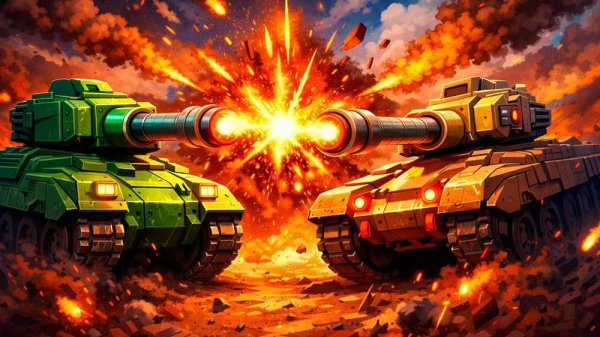
Force Fusion Battle Planner stands out by making every unit placement matter. The merge mechanic is intuitive yet offers surprising depth, as combining too early can leave gaps in your formation. Territory expansion keeps the campaign fresh, and the clean interface lets you focus on strategy. It is a satisfying choice for anyone who enjoys puzzles with a territorial twist.
About this game
Core Merging Mechanics
At the heart of this experience lies a simple yet deep system: when two identical vehicles touch, they fuse into a single upgraded version. This removes the need for complex construction trees and lets you focus on positioning and timing. Each merge increases unit potency, but also changes how that piece fits into your overall formation. You must decide whether to combine early for immediate strength or hold back to maintain coverage across the battlefield.
Territory Expansion Loop
Success in each encounter unlocks adjacent areas, gradually expanding your controlled zone. New territories often present different layouts and opponent compositions, forcing you to adapt your merging priorities. Some regions favor defensive postures with narrow corridors, while others open into wide spaces where mobile units excel. This variety ensures that no two expansion phases feel identical, and your overall strategy must evolve as your borders grow.
Planning Ahead Under Pressure
The game rewards players who think several moves ahead. Because unit positions and merge opportunities shift with every action, you must constantly reassess your plan. Opponent movements can disrupt your setup, requiring quick adjustments to your formation. This creates a satisfying tension between long-term vision and moment-to-moment adaptation. The best players learn to read the board and anticipate how their choices will ripple forward.
Balancing Protection and Advancement
Every decision carries a trade-off between securing what you already hold and pushing into new territory. Committing too many units to expansion leaves your base vulnerable, while focusing solely on defense stalls your progress. The game provides clear feedback on these trade-offs, helping you refine your approach over time. Learning to strike this balance is the key to consistent success and forms the core challenge that keeps each session engaging.
Visual Clarity and Interface Design
The interface prioritizes readability, with clear unit icons and a grid that makes positional analysis straightforward. Drag-and-drop controls feel responsive, and merge animations provide satisfying visual confirmation of your actions. This clean presentation lets you concentrate on tactical decisions rather than struggling with clunky menus. The design philosophy here is that good strategy games should let players focus on thinking, not hunting for buttons.
Compatibility
This H5 game runs smoothly on:
• Desktop computers (Windows / Mac) • Mobile phones (iPhone / Android)
• Tablets (iPad / Android)
🌐 Best experienced with Chrome, Safari, or Edge
Faq
Is Force Fusion Battle Planner available on mobile devices?
The game is designed with touch-friendly controls and a grid layout that works well on smartphones and tablets. While no specific platform list is provided, its interface suggests it would be comfortable on both desktop and mobile screens.
How long does a typical match last in Force Fusion Battle Planner?
Match duration varies based on the size of the territory and the number of units involved. Early encounters may wrap up in under ten minutes, while larger battles with multiple merge opportunities can extend to twenty minutes or more.
Does Force Fusion Battle Planner include a tutorial for new players?
The game introduces its core mechanics gradually, often through the first few encounters. Players learn merging and placement basics by doing, with subtle prompts guiding them through initial decisions without overwhelming them with text.
Can I replay completed territories in Force Fusion Battle Planner?
Revisiting previously captured areas is typically allowed, giving players a chance to refine their approach or aim for a more efficient victory. This also helps in understanding how different merge sequences affect outcomes.
What happens when I merge two high-level vehicles in Force Fusion Battle Planner?
Merging high-level units produces an even stronger vehicle with enhanced capabilities. However, it also reduces your total unit count, so you must weigh the power gain against the loss of battlefield coverage.
Is there a scoring system that tracks performance in Force Fusion Battle Planner?
Many games of this type include a performance metric such as efficiency rating or turn count. This encourages players to optimize their strategies and compare results across different playthroughs.






Comments
0 comments