
Reviews
Patch Grid Logic Challenge succeeds by focusing on a single, well-executed idea. The numbered tile placement mechanic is simple to learn but offers genuine depth as the grids expand. I appreciate how the game respects the player's time: no timers, no pressure, just pure logical deduction. The browser-based format means I can play a quick round while waiting or settle in for a longer session. The interface is minimal and responsive, working equally well on my phone and laptop. For anyone who enjoys spatial reasoning puzzles, this is a solid, no-fuss option that delivers exactly what it promises.
About this game
Core Puzzle Principle
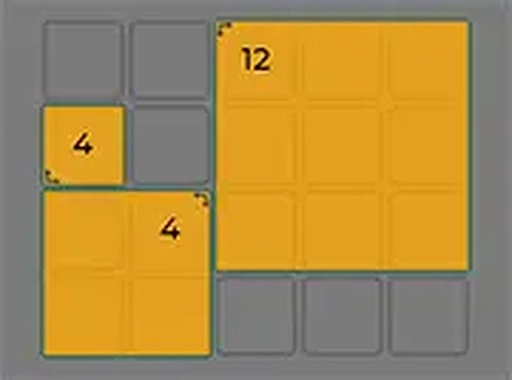
At its heart, this game revolves around a single rule: every numbered square must occupy a unique position on the board. The numbers themselves act as hints, guiding where each piece can be placed. Players must examine the grid, consider the available spaces, and decide the correct order for positioning each tile. This straightforward mechanic creates a foundation that supports increasingly complex arrangements.
Level Progression and Difficulty
The early stages introduce small grids with few pieces, allowing newcomers to grasp the basic logic. As players advance, the boards grow larger and the number of tiles increases. Later puzzles require careful sequencing, as a single misplaced tile can block other placements. The difficulty curve feels natural, with each new level building on skills learned in previous ones. This structure keeps the experience engaging without feeling repetitive.
Interface and Accessibility
The game runs entirely within a web browser, so there is no need to download or install any software. Controls are simple: click or tap a tile, then select its destination on the grid. A full-screen option is available for those who prefer a larger view. The clean, uncluttered design helps players focus on the puzzle without distractions. Both mouse and touch inputs are supported, making it easy to play on desktop computers, tablets, or phones.
Strategic Approaches
Experienced players often start by placing larger numbered tiles first, as these pieces tend to have fewer valid positions. Observing the entire grid before making any moves can reveal patterns that simplify the puzzle. When progress stalls, stepping back and re-evaluating the board from a different perspective often helps. Regular practice improves pattern recognition and spatial reasoning, making each new puzzle feel more manageable.
Session Flexibility
Each puzzle can be completed in a few minutes, making this game suitable for quick mental breaks. At the same time, the increasing complexity allows for longer play sessions when time permits. There is no timer or pressure, so players can work at their own pace. This flexibility makes the game appealing for both casual and dedicated puzzle enthusiasts.
Compatibility
This H5 game runs smoothly on:
• Desktop computers (Windows / Mac) • Mobile phones (iPhone / Android)
• Tablets (iPad / Android)
🌐 Best experienced with Chrome, Safari, or Edge
Faq
Is Patch Grid Logic Challenge free to play?
Yes, the game is completely free to play. There are no hidden fees or in-app purchases required. You can access all available puzzles without any payment.
Can I play Patch Grid Logic Challenge on my mobile phone?
Absolutely. The game is designed to work on mobile browsers, tablets, and desktop computers. Touch controls are fully supported, so you can play on your phone without any issues.
Do I need to create an account to save my progress?
No account is required. The game runs entirely in your browser, and progress is typically saved locally. You can close the browser and return later to continue from where you left off.
How many levels are available in Patch Grid Logic Challenge?
The game includes a variety of levels that increase in difficulty. While the exact number may vary, there are enough puzzles to provide several hours of gameplay. New puzzles may be added over time.
What happens if I get stuck on a puzzle?
There is no penalty for taking your time. If you feel stuck, try looking at the grid from a different angle or placing a different tile first. Sometimes stepping away and returning later can also help you see new solutions.
Is Patch Grid Logic Challenge suitable for children?
Yes, the game is designed for players of all ages. The early levels are simple enough for younger players, while later puzzles offer a satisfying challenge for adults. No violent or inappropriate content is present.







Comments
0 comments