
Reviews
Early Geometry Drawing for Kids stands out for its patient teaching style. The companion character never rushes, and the positive feedback after each shape builds confidence. The progression from circles to stars feels natural, and the lack of penalties for mistakes keeps children engaged. Parents will appreciate the real-world connections suggested after play. It is a well-designed tool for building foundational geometry skills.
About this game
Guided Drawing Sessions
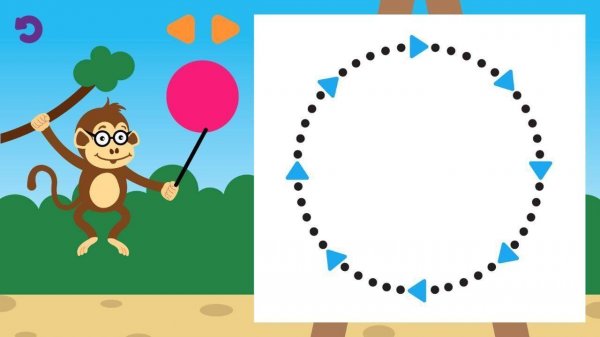
In Early Geometry Drawing for Kids, a cheerful animal companion walks young learners through each drawing exercise. The companion provides clear, spoken instructions that tell children where to place their finger or cursor. By connecting dots or tracing lines, kids create basic geometric figures. The pace is gentle, allowing plenty of time to understand each step. This guided approach reduces frustration and helps children focus on the task at hand.
Shape Recognition Progression
The game introduces shapes in a logical order, starting with simple forms like circles and squares before moving to triangles and stars. Each new shape builds on skills learned earlier. Children practice drawing the same shape multiple times, which reinforces memory and fine motor control. The progression is designed so that young players feel a sense of achievement as they advance, without being overwhelmed by difficulty spikes.
Positive Feedback System
Every time a child completes a shape, the game responds with cheerful animations and encouraging sounds. This positive reinforcement motivates continued practice and helps build self-esteem. The feedback is immediate, so children connect their action with the reward. There are no negative consequences for mistakes; the companion simply guides them to try again. This creates a safe, low-pressure learning environment.
Child-Friendly Interface
The user interface uses large, colorful buttons and simple icons that even preschoolers can understand. Menus are minimal, and navigation is straightforward. The game works with both touch screens and mouse input, making it accessible on various devices. No reading is required to play, as all instructions are delivered visually and audibly. This design ensures that children can explore independently, with minimal adult assistance.
Real-World Connections
While the game focuses on digital drawing, it encourages parents to extend learning into everyday life. After playing, families can look for circles in the kitchen, squares in the living room, or triangles in street signs. This connection between on-screen activity and real objects deepens understanding and makes geometry relevant. The game itself does not include these real-world examples, but its structure naturally supports such discussions.
Compatibility
This H5 game runs smoothly on:
• Desktop computers (Windows / Mac) • Mobile phones (iPhone / Android)
• Tablets (iPad / Android)
🌐 Best experienced with Chrome, Safari, or Edge
Faq
What age group is Early Geometry Drawing for Kids designed for?
The game is built for children aged 3 to 6 years. Its simple interface, spoken instructions, and gentle pace make it suitable for preschoolers and kindergarteners who are just beginning to recognize shapes and practice fine motor control.
Does the game require any reading ability?
No reading is needed. All instructions are delivered through spoken words and visual cues. The companion character guides children step by step, so even non-readers can play independently without adult help.
Can the game be played on both tablets and computers?
Yes. The game supports both touch screen and mouse input. Children can tap or drag on tablets, or click and drag on computers. This flexibility allows families to use whatever device they have available.
How does the game handle mistakes?
There are no penalties for errors. If a child draws a line incorrectly, the companion gently encourages them to try again. The focus is on practice and improvement, not on getting everything right the first time.
Are there any in-app purchases or advertisements?
The game is a self-contained experience with no in-app purchases or third-party advertisements. Once purchased or downloaded, children can play all available shapes without any interruptions or extra costs.
What shapes does the game teach?
Children learn circles, squares, triangles, rectangles, and stars. The game introduces these shapes in a gradual sequence, starting with the simplest and building up to more complex figures. Each shape is practiced multiple times to reinforce recognition.




Comments
0 comments